
Can Co-Working Really Boost Exam Prep for the EPPP or NCE? Let’s Break It Down
Preparing for the EPPP or NCE is… no joke. You’re cramming theories, treatment models, legal/ethical frameworks, DSM-5 categories, and if you’re balancing an internship, part-time work, or life in general, it’s a lot.
Add procrastination, burnout, and the occasional mental freeze into the mix, and suddenly the exam feels like climbing Mount Everest with a backpack full of bricks.
But here’s the interesting part: the thing that might unlock more progress isn’t another flashcard app or a stricter study schedule.
It might just be... co-working.
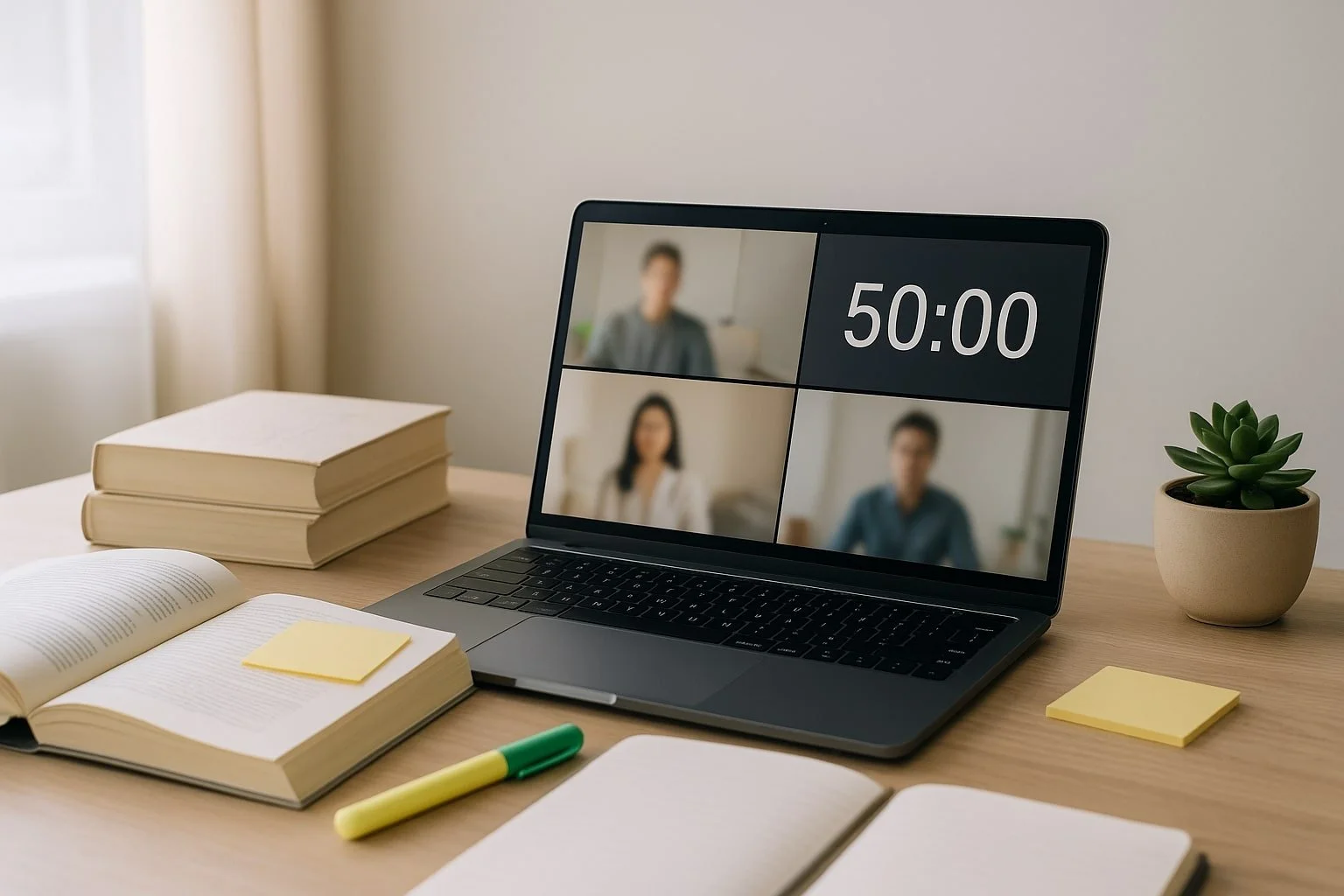
Wait, Co-working? For Exam Prep?
Yes, and it’s not just for techies, freelancers, or digital nomads.
Study-based co-working (especially in a virtual format) is becoming a quiet revolution for psychology candidates preparing for the EPPP or NCE. And it’s all based on a concept called parallel work, showing up to work alongside others who are also working toward similar goals.
Sounds simple? It is. But here’s why it works.
Why Co-working Works for EPPP or NCE Prep
1. It tackles your biggest enemy: isolation
Most people won’t admit it, but studying for a high-stakes exam like the EPPP can feel painfully lonely. Especially if you’re not in a cohort or your supervisor is too busy to check in.
Co-working breaks that bubble. You're suddenly part of a focused study space — even if it’s online. You see others reading, highlighting, using index cards, and reviewing ethics codes.
It’s not about talking. It’s about being with people who get it.
2. Body doubling increases your focus (and keeps procrastination away)
“Body doubling” is a simple concept: you're more likely to stick to a task when someone else is present — even if they aren't doing the same thing.
During co-working sessions, knowing someone might see you pause mid-chapter to open Instagram? That’s a powerful nudge to stay on task.
This is especially useful for:
● ADHD candidates
● Chronic procrastinators
● People dealing with EPPP-induced anxiety spirals
3. Consistency comes faster in a shared routine
One of the most useful parts of co-working (especially the way we do it at Psych Co-working) is the built-in schedule.
You don’t have to wonder when you’ll study or leave it to chance. You just show up at a set time, and you do the thing.
Studies happen in 50-minute or 90-minute blocks. Breaks are timed. Momentum comes naturally.
That consistency over a few weeks? It’s a quiet confidence builder.
4. Your brain needs cues — and a virtual room can create them
You know how your body snaps into “work mode” when you walk into an office? Virtual co-working does a version of this.
The right cues make a huge difference:
● The timer on the shared screen
● A short accountability check-in
● Watching someone else highlight a page, type out notes, look thoughtfully at the screen
Suddenly, your brain goes: “Okay. Time to study.”
5. You don’t feel like you’re burning out alone
There’s something comforting about seeing someone else stretch, sigh, or rub their temples at the same time as you. You're not the only one feeling the pressure. You’re not stuck in your own head.
You’re in a room of people who all want the same thing: to pass.
How to Use Co-working to Boost EPPP Prep (The Smart Way)
Set a micro-goal before the session
Example: I’m going to review three ethics flashcards and highlight two sections from the study guide.
Don't overthink it — just show up
The hardest part is the login. Once you're there, the structure does the rest.
Use sessions for the “boring grind” parts
Stuff like:
● Memorizing codes of conduct
● Reviewing diagnostic criteria
● Repeating terminology flashcards These tasks require focus — but not necessarily creativity or solitude.
Pair study sessions with deeper solo reflection time
Some things may need quiet solitude (like writing practice essays or integrating concepts). Co-working helps you stay on track so you don’t resent studying when you are alone.
Stack sessions before and after key deadlines
Like before your mock exams or right after feedback sessions, to build momentum.
“This Sounds Great — But Does It Really Help People Pass?”
It’s not a magic formula, no. You still have to sit down and learn the content
But what co-working does is remove a massive barrier: the emotional and structural resistance to starting and sticking with the work.
For a lot of future psychologists, the EPPP or NCE isn’t a question of smarts — it’s about sustained, regulated effort.
And sometimes, that effort is easier when someone is there with you — even virtually.
What We Do at Psych Co-Working for EPPP/NCE Prep
We’ve designed our Parallel Work Sessions for exactly this kind of support:
● Structured study blocks
● Quiet group focus rooms
● A community of psychology peers
● No pressure to share — just show up and work
● Accessible monthly pricing (cheaper than most tutors)
You’ll be surrounded by others who actually understand what you’re studying — and why it feels overwhelming sometimes.
Feeling curious? You're not alone. Your study journey doesn’t have to be solitary or stressful.
Whether you’re just getting started or drowning in the DSM, co-working could be the thing that gets you over the line.
Want to try a session and feel the momentum for yourself? Let’s study together, and make this exam feel a little more human, a little less massive.
